Year
Class of 2000
Browse commencement speeches from 2000, including addresses by Anna Quindlen, Carleton Fiorina, and Kofi Annan. Each record links to the available source material, transcript, video, and archive context.
11 addresses 10 themes 6 highlights
Highlights from 2000
Records with stronger source signals, summaries, transcripts, videos, or visual archive material.
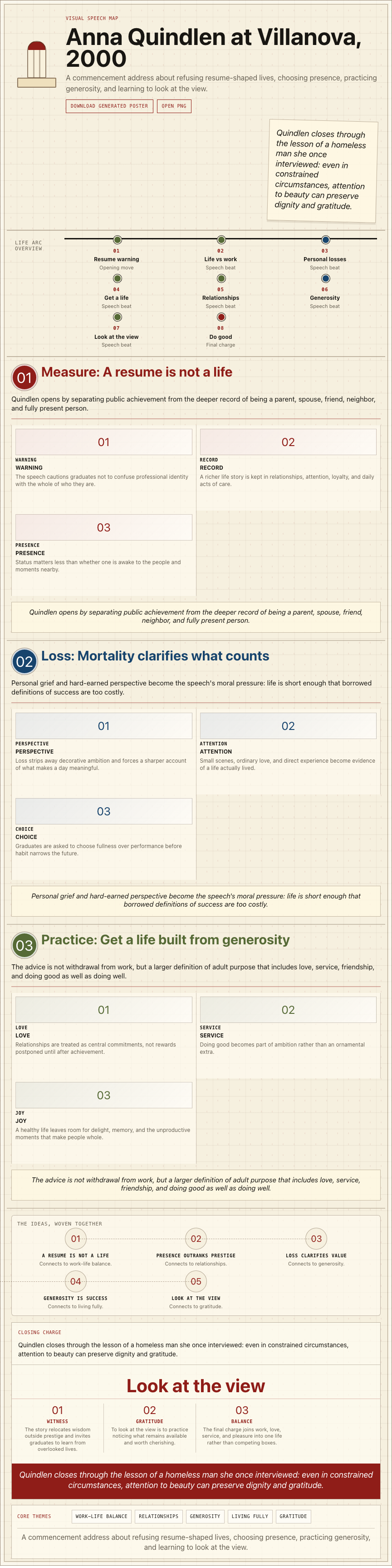 Anna Quindlen Villanova University Anna Quindlen, a novelist, urges graduates not to confuse their work with their lives, arguing that a resume is no substitute for relationships, generosity, and presence. Drawing on personal loss and the example of a homeless man she once interviewed, she encourages students to live fully rather than merely exist, to appreciate small details, and to do good as well as do well. InfographicSummaryTranscriptOfficial source
 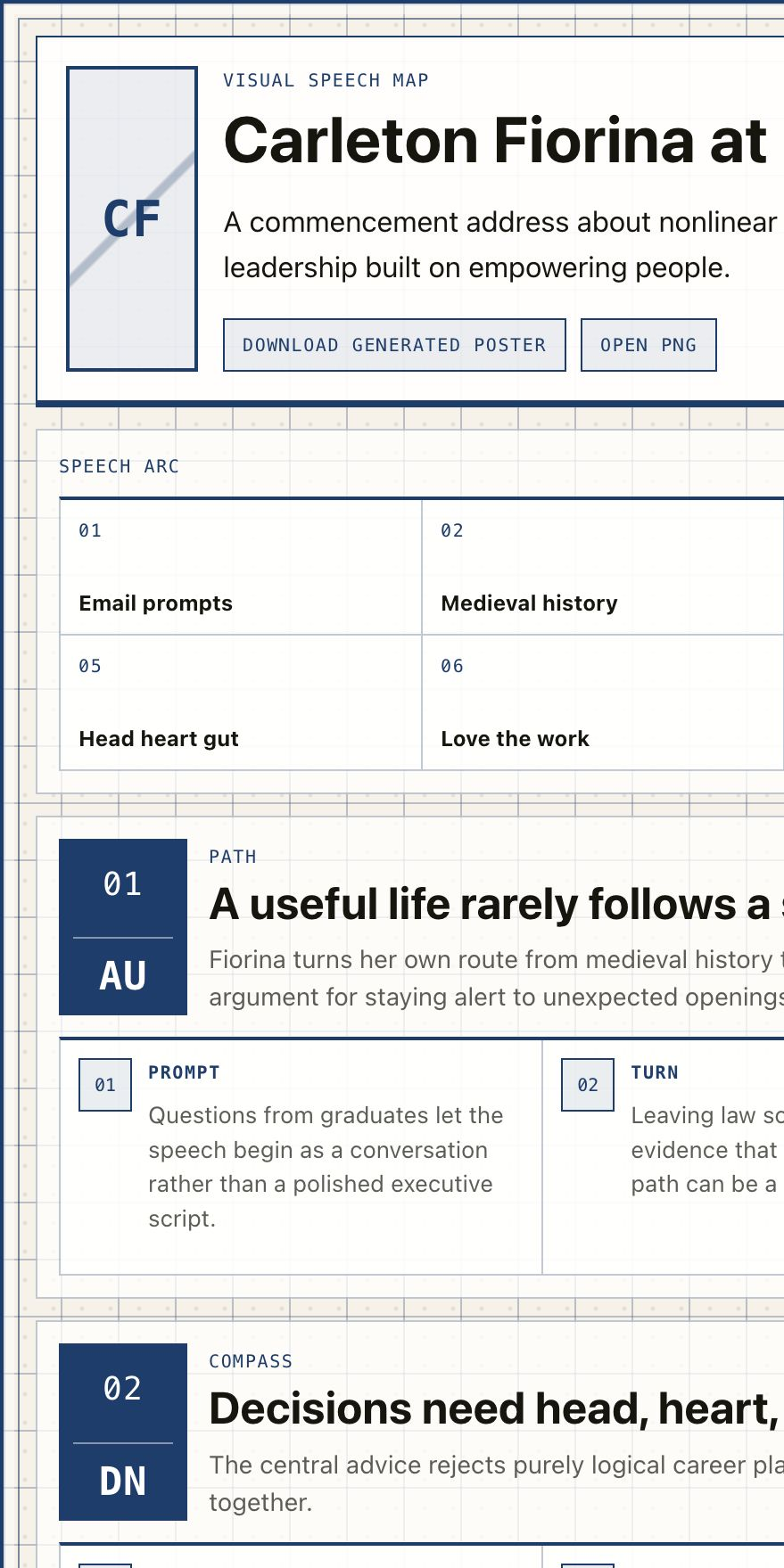 Carleton Fiorina Massachusetts Institute of Technology Carly Fiorina, CEO of Hewlett-Packard and an MIT Sloan alumna, frames life as a journey that rarely follows a logical path, drawing on her own experiences quitting law school and working her way from secretary to CEO. She urges graduates to engage their head, heart, and gut in decisions, to love what they do, and to honor those who supported them. She also describes a redefined model of leadership for the Information Age, emphasizing empowering people over controlling them. InfographicSummaryTranscriptOfficial source
 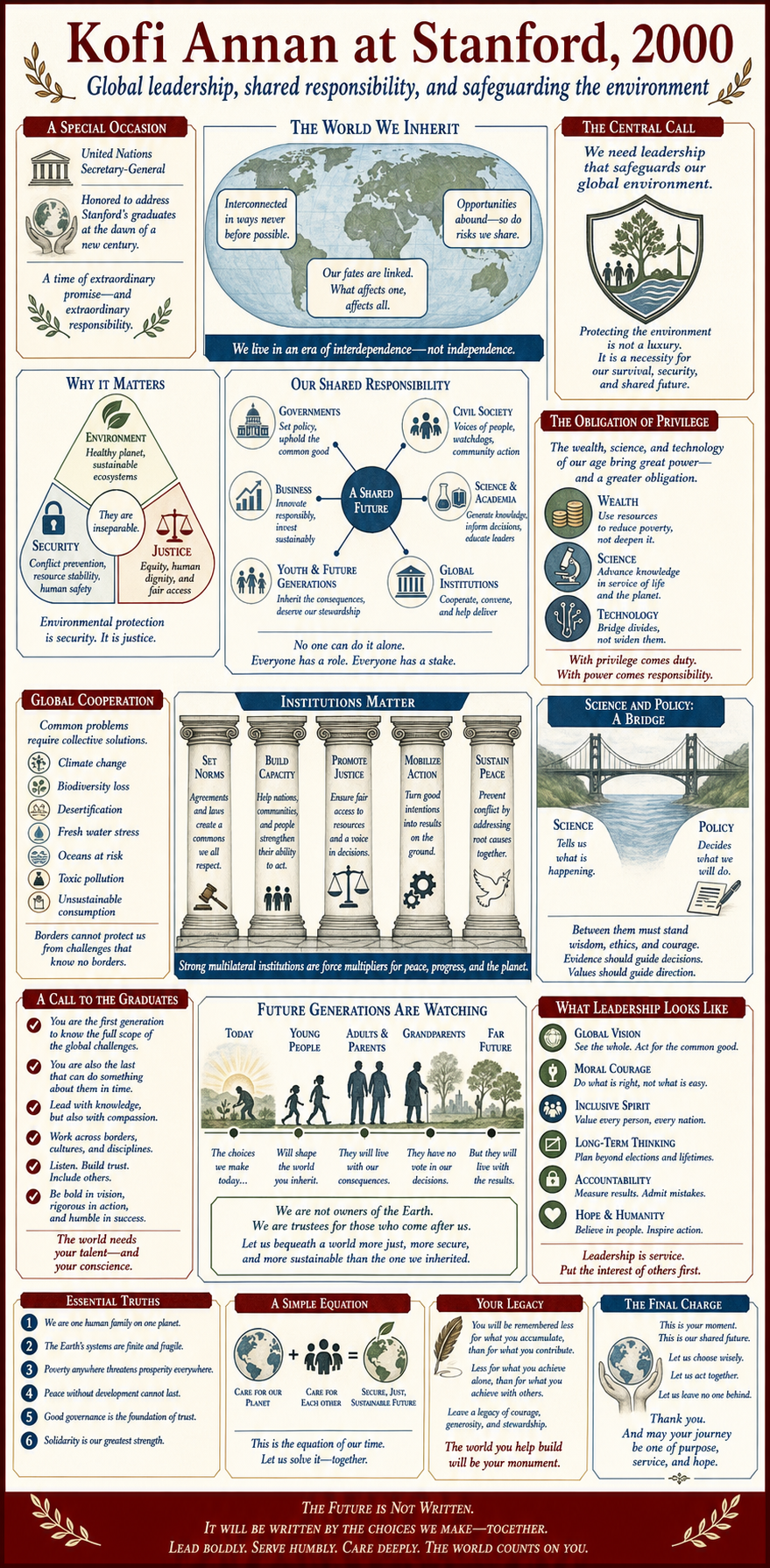 Kofi Annan Stanford University UN Secretary-General Kofi Annan urges the Stanford Class of 2000 to take the lead in safeguarding the global environment. Drawing on his report 'We the Peoples,' he warns of grave environmental challenges—water stress, food insecurity, and accelerating climate change—and criticizes the low political priority given to sustainable development. He calls on graduates in various fields to become activists, entrepreneurs, and citizens who build an ethic of global stewardship. InfographicSummaryTranscriptOfficial source
 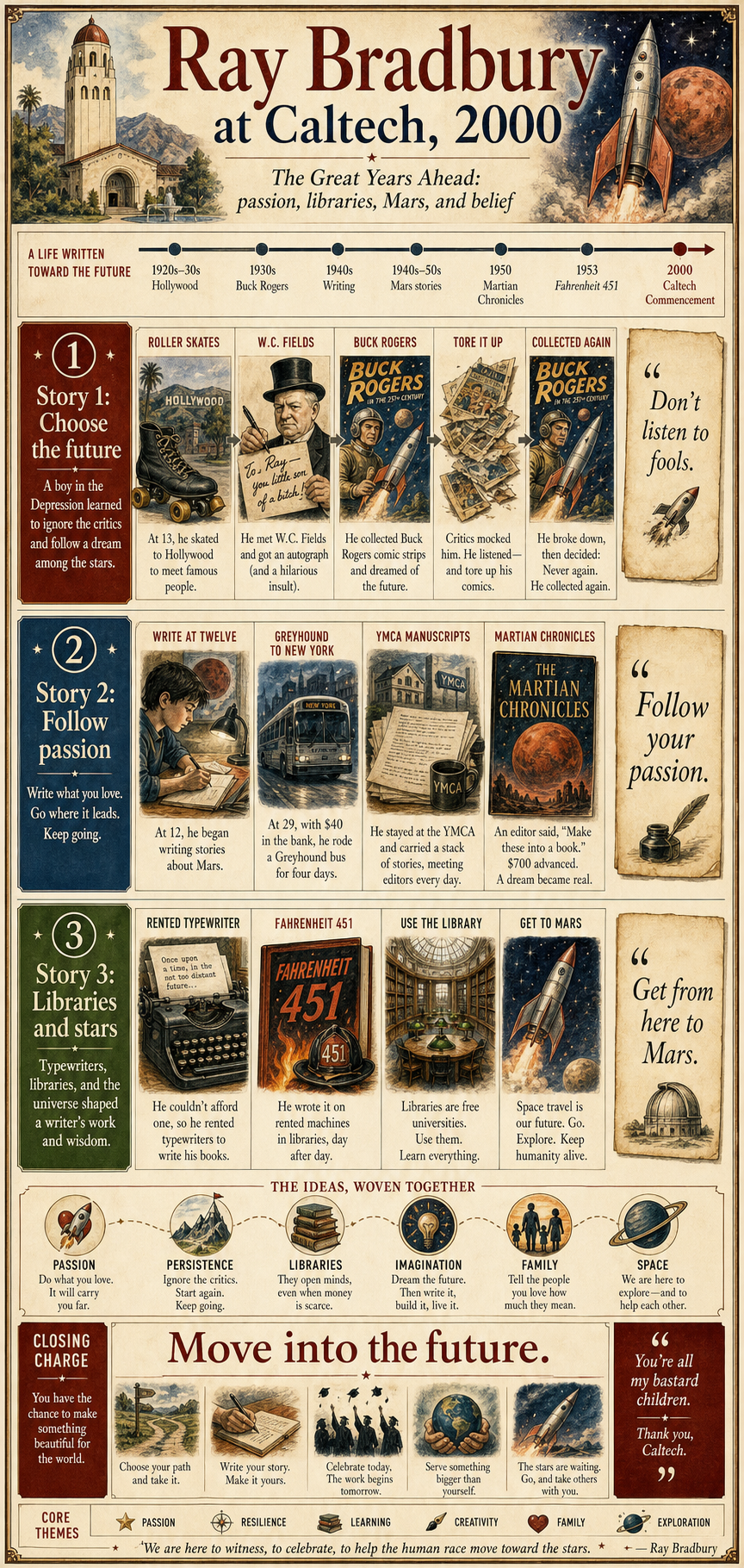 Ray Bradbury Caltech Ray Bradbury recounts his early life of poverty, his decision to become a writer despite never attending college, and the formative moments that shaped his career, including resuming his Buck Rogers comic collection after critics discouraged him. He urges graduates to reject doubters, follow their passion, use the library, and embrace life with celebration. He emphasizes space travel as essential to humanity's immortality, encourages students to express love to their families, and frames their purpose as witnessing and celebrating the universe. InfographicSummaryTranscript
 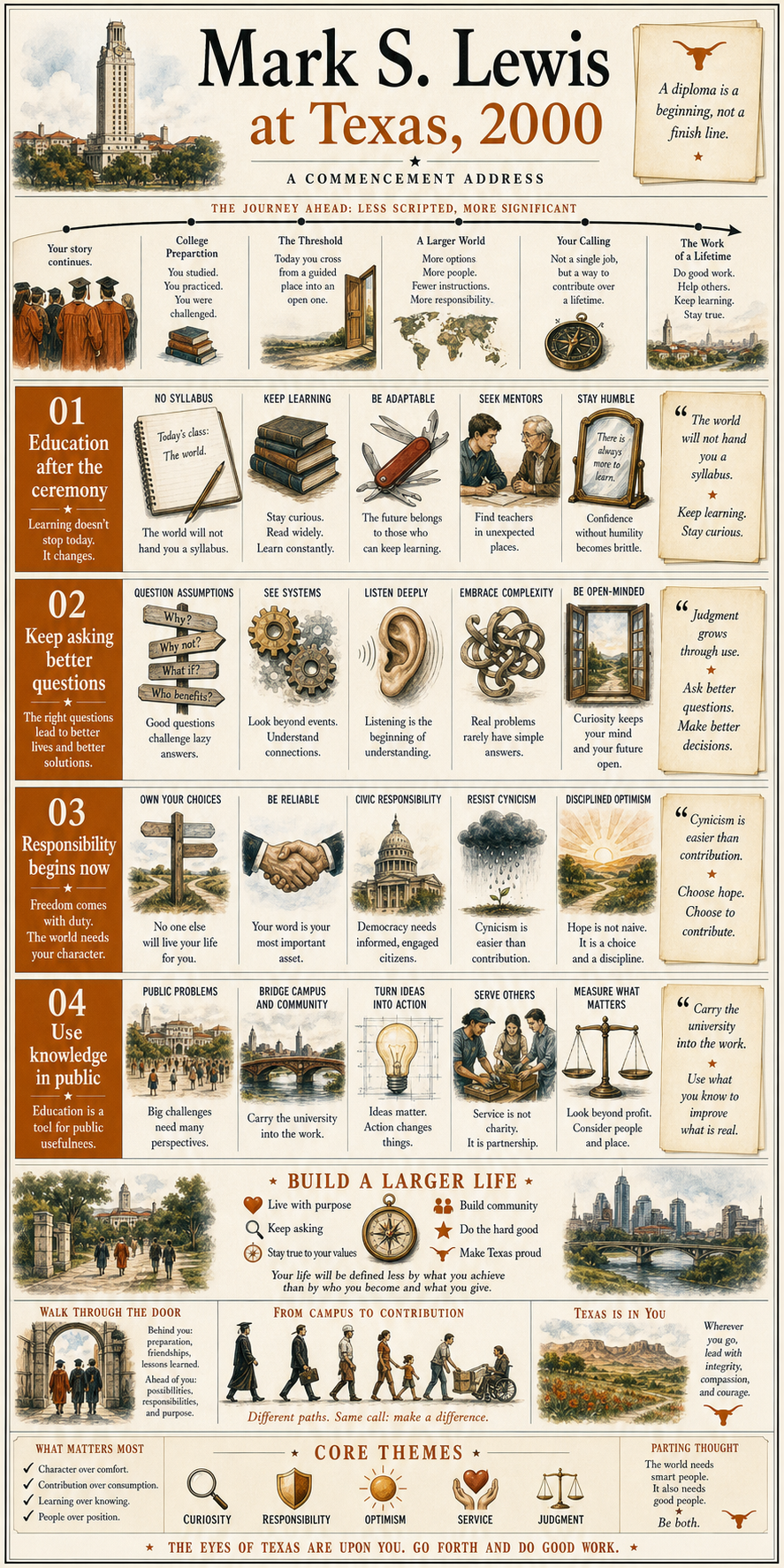 Mark S. Lewis University of Texas, Austin Mark S. Lewis tells three stories—Blondin the tightrope walker, a 38-year childhood bet among three friends about who would be most successful, and Eddie 'the Eagle' Edwards the Olympic ski jumper—to argue that success is not measured by fame, money, or happiness but by whether you are proud of what you have done. He recounts how his friends Carl and Ben faced ruin very differently, concluding that self-respect and the willingness to take risks matter most. He closes with three hopes for graduates: to take leaps of faith, to stay open to redefining success, and to only do things that make them proud. InfographicSummary
 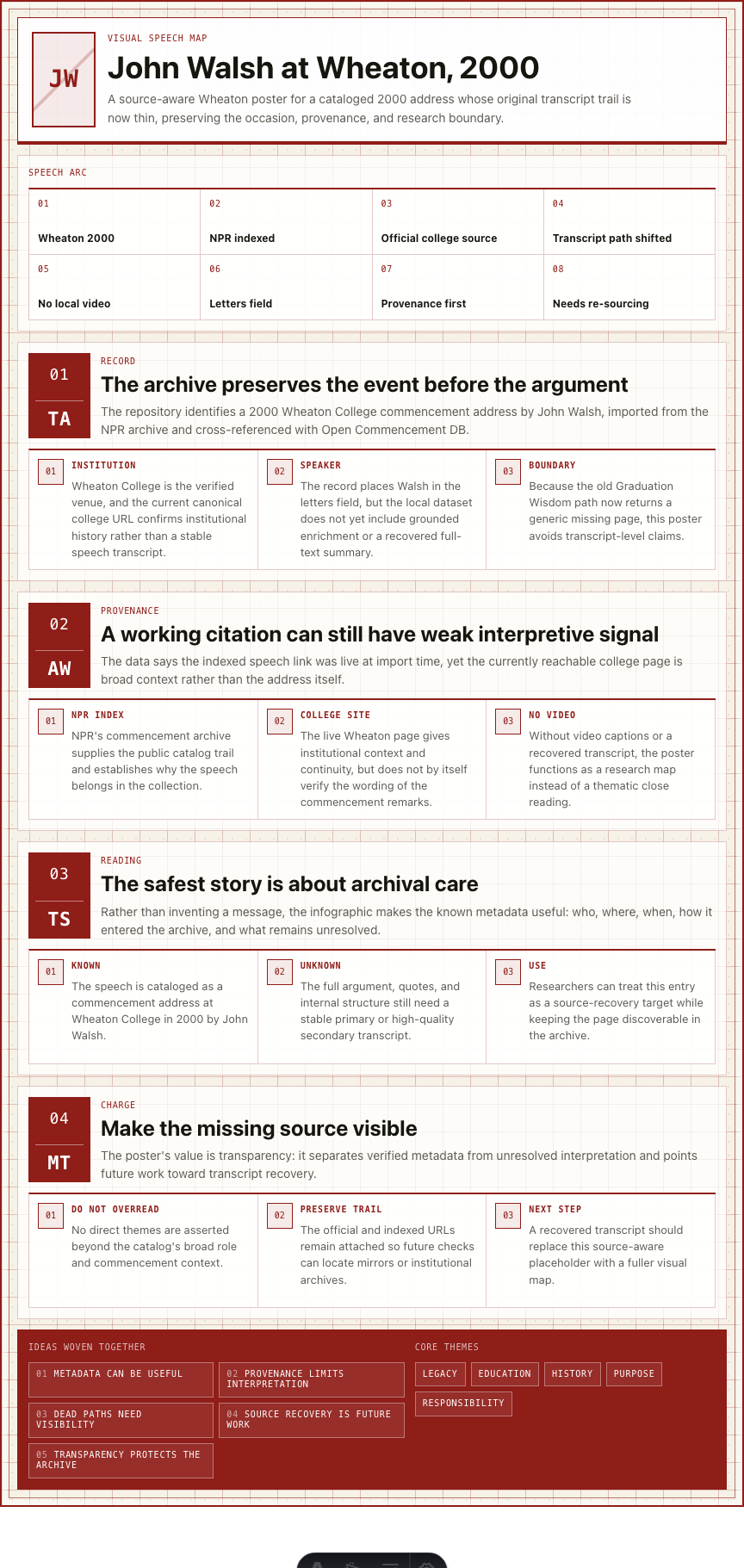 John Walsh Wheaton College InfographicTranscriptOfficial source
 Represented themes
Common ideas classified across this year's speeches.
All 2000 addresses
Complete archive records for this year, sorted by institution.
№ 2000.001 № 2000.002 № 2000.003 № 2000.004 № 2000.005 № 2000.006 № 2000.007 № 2000.008 № 2000.009 № 2000.010 № 2000.011
Guy Kawasaki
Babson College
Ray Bradbury
Caltech
Carleton Fiorina
Massachusetts Institute of Technology
Tim Russert
Niagara University
Kofi Annan
Stanford University
Billie Jean King
University of Massachusetts
Seamus Heaney
University of Pennsylvania
Mark S. Lewis
University of Texas, Austin
Anna Quindlen
Villanova University
John Walsh
Wheaton College
Robert Woodward
Yale University