Theme
Commencement Speeches About Technology & Science
Delivered increasingly by founders and scientists, these speeches wrestle with what technology is for. They celebrate discovery and problem-solving while pressing graduates to aim their tools at real human needs — and to take responsibility for what they build.
46 speeches / 22 core matches
How to read this theme
Technology speeches in the archive are rarely only about invention. They ask graduates to connect technical ambition to human judgment: what should be built, who benefits, and what obligations come with powerful tools.
The theme often draws together science, entrepreneurship, creativity, and public responsibility. The strongest speakers make innovation feel less like disruption for its own sake and more like disciplined service to real needs.
Start here
3 good entry points
Begin with these speeches if you want the clearest path into technology & science.
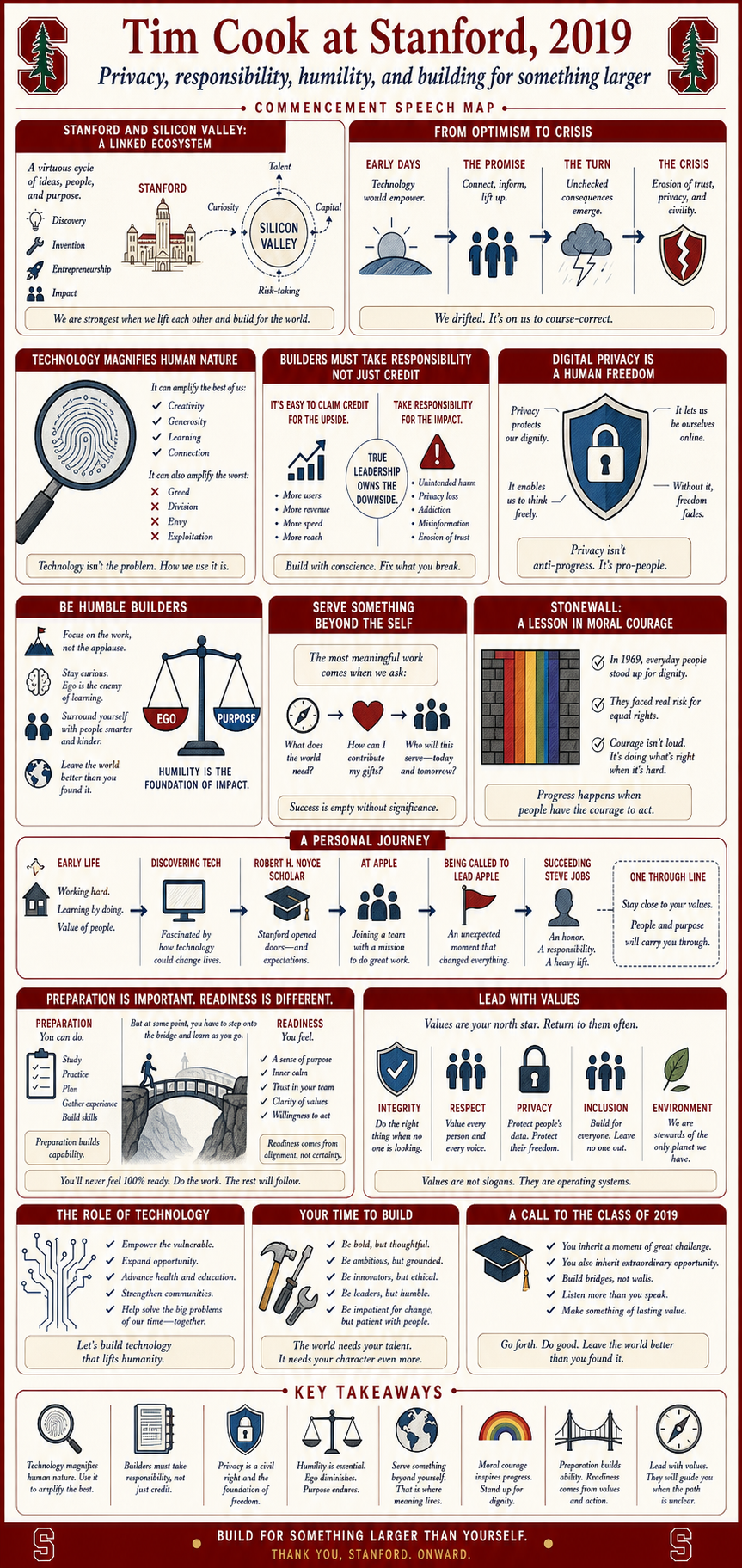
Tim Cook Stanford University / 2019 Why it belongs here He examines how technology magnifies human nature and warns about data breaches, privacy violations, and digital surveillance eroding human freedom. This theme is central to the speech. 02 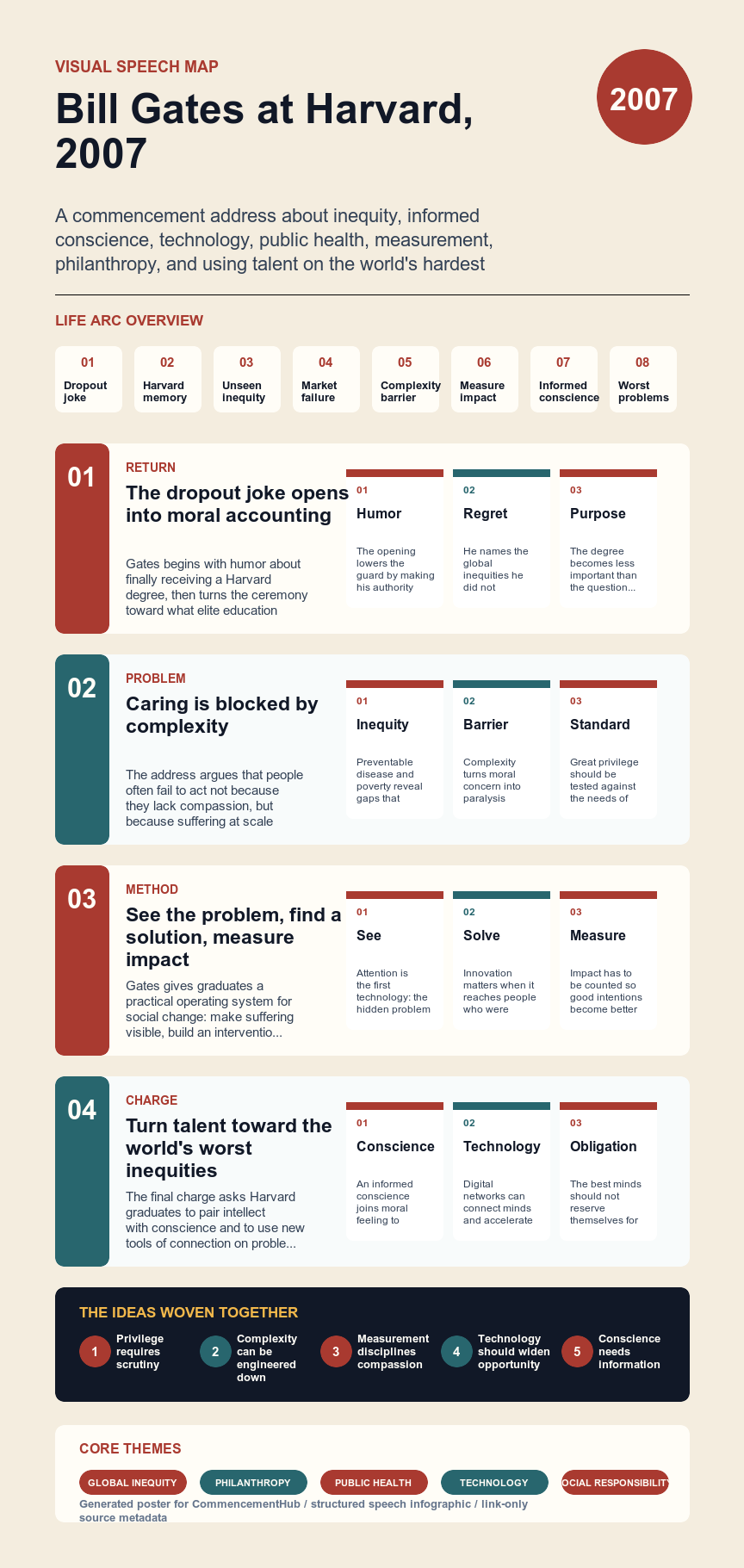 Bill Gates Harvard University / 2007 Why it belongs here He describes how computers, the Internet, and biotechnology can cut through complexity and connect brilliant minds to solve the world's biggest problems. This theme is central to the speech. 03
 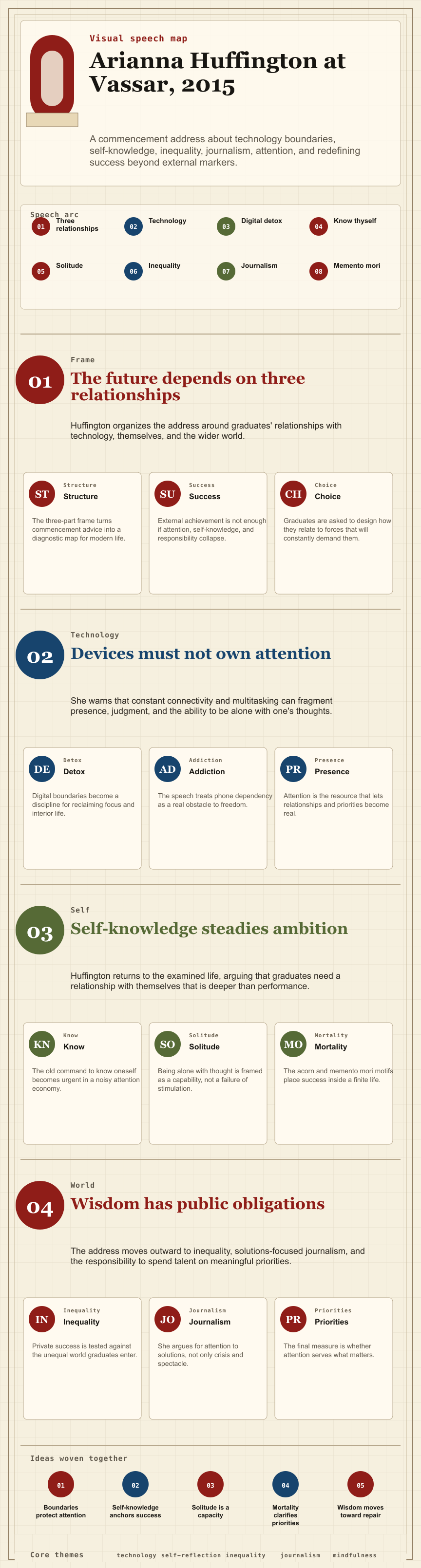 Arianna Huffington Vassar College / 2015 Why it belongs here She warns graduates about digital addiction and distraction, urging them to build boundaries and master technology rather than be enslaved by it. This theme is central to the speech.
 Featured speeches
Visual speech maps and strong matches
Why it belongs here He examines how technology magnifies human nature and warns about data breaches, privacy violations, and digital surveillance eroding human freedom.
Why it belongs here He describes how computers, the Internet, and biotechnology can cut through complexity and connect brilliant minds to solve the world's biggest problems.
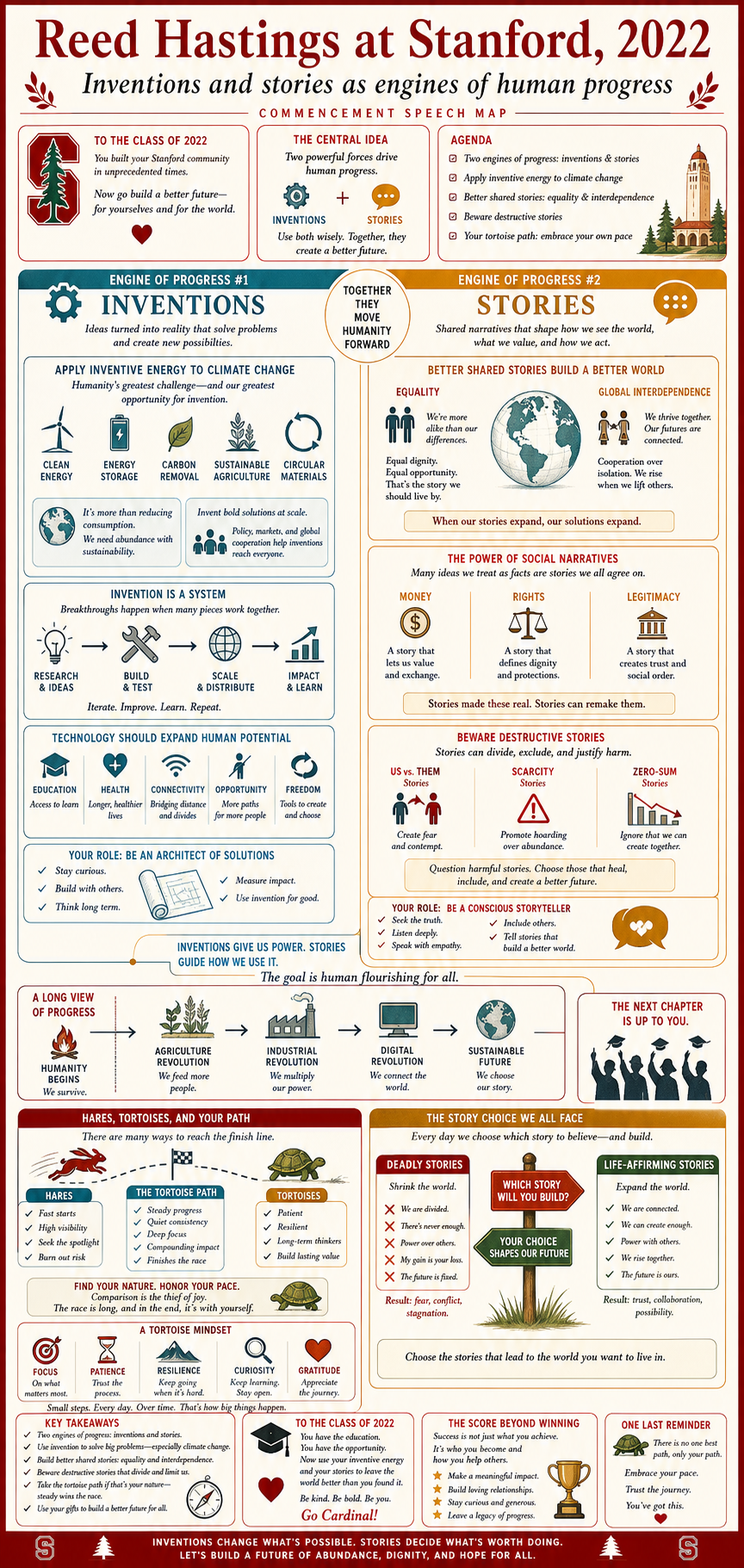
Why it belongs here Hastings frames inventions and science as a primary driver of human progress, urging graduates to invent solutions to climate change like better energy storage, nuclear power, green cemen...
Why it belongs here She warns graduates about digital addiction and distraction, urging them to build boundaries and master technology rather than be enslaved by it.
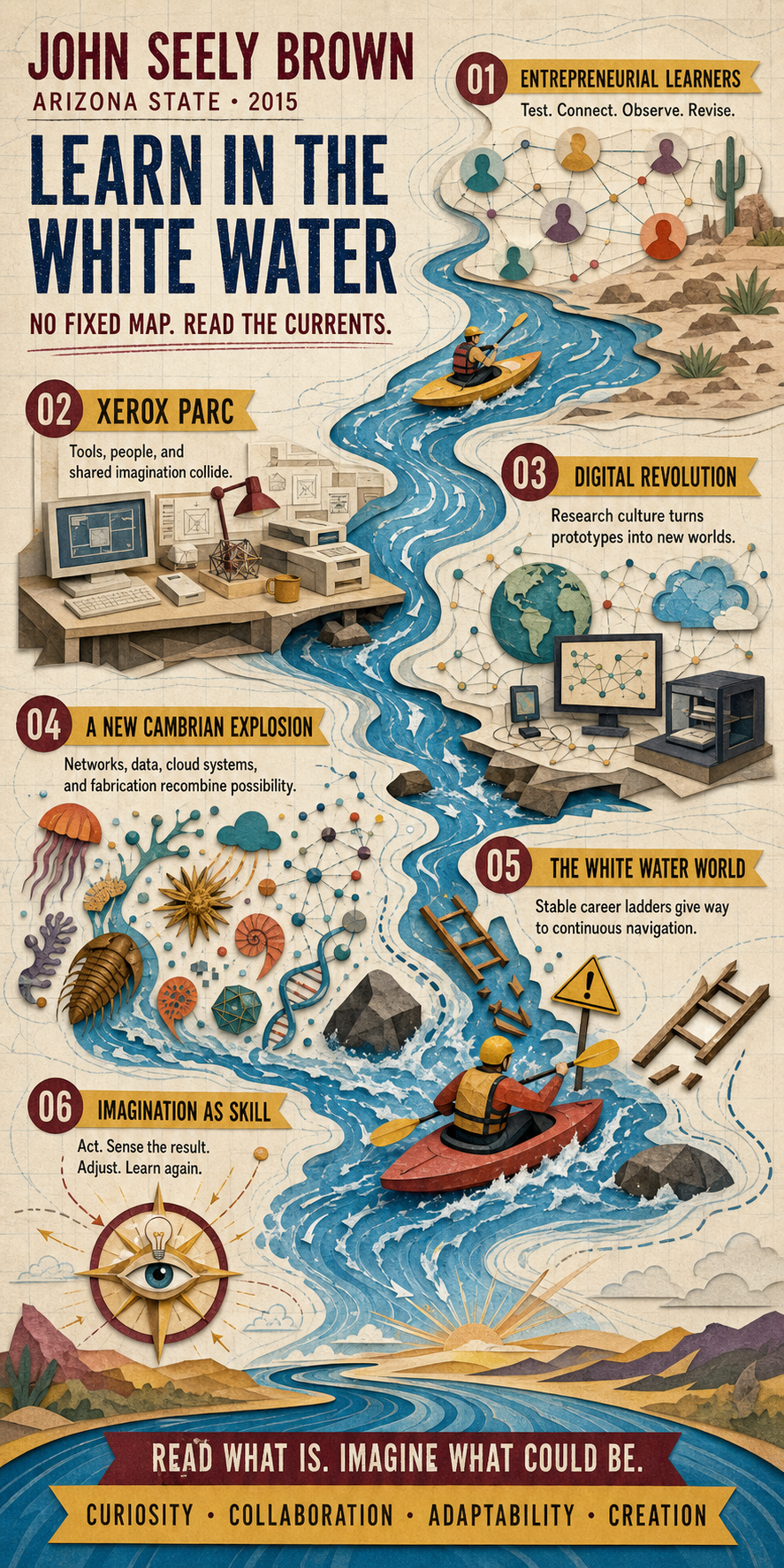
Why it belongs here He recounts inventing foundational digital technologies at Xerox PARC and describes the current Cambrian Explosion of AI, big data, cloud, and 3D printing saving lives.
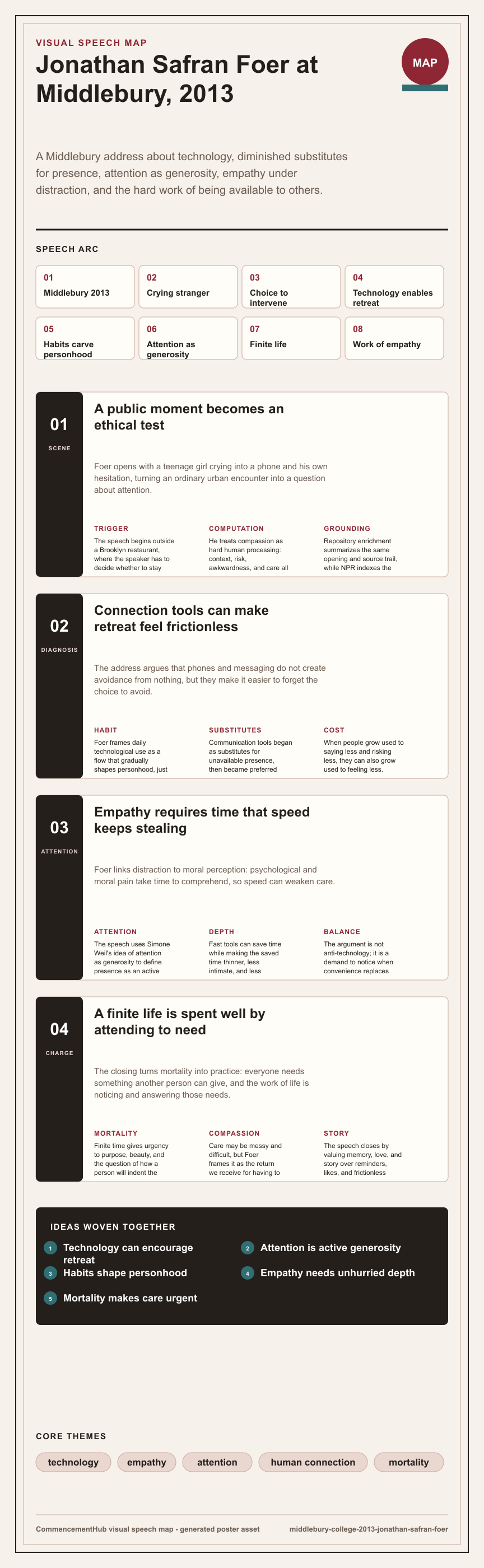
Why it belongs here The address argues that communication technologies encourage retreat and diminished substitutes for real human presence, warning against both anti- and unquestioning pro-technology stances.
Browse the theme
Core matches first
Labels describe how directly each speech matches this theme.
Core matches 22
Stanford University / 2022 / Co-founder and co-CEO, Netflix
Stanford University / 2019 / CEO, Apple
Vassar College / 2015 / Field: letters
Arizona State University / 2015 / Field: science
Middlebury College / 2013 / Field: letters
Harvard University / 2007 / Field: business
University of North Carolina / 2012 / Field: politics
Villanova University / 2010 / Field: arts
University of California, Berkeley / 2010 / Field: arts
Massachusetts Institute of Technology / 2026 / Advanced Micro Devices CEO
Massachusetts Institute of Technology / 2024 / Flagship Pioneering CEO and Moderna co-founder
Massachusetts Institute of Technology / 2022 / Director-General of the World Trade Organization
Massachusetts Institute of Technology / 2018 / COO, Facebook
Massachusetts Institute of Technology / 2017 / CEO, Apple
Massachusetts Institute of Technology / 2014 / Chair and CEO, DuPont
Massachusetts Institute of Technology / 2007 / President emeritus, MIT
Massachusetts Institute of Technology / 2006 / Chairman, Federal Reserve
Massachusetts Institute of Technology / 2005 / Co-founder and CEO, QUALCOMM
Massachusetts Institute of Technology / 2004 / Director, National Institutes of Health
Related mentions 24
Stanford University / 2026 / CEO of Google and Alphabet
Stanford University / 2020 / Astrophysicist and higher-education leader
Stanford University / 2017 / California Supreme Court justice
Stanford University / 2015 / NBC News chief foreign correspondent
Ball State University / 2008 / Field: business
Stanford University / 2014 / Philanthropists
Smith College / 2013 / Field: letters
Stanford University / 2013 / Mayor of New York City
Massachusetts Institute of Technology / 2012 / Founder and Executive Director, Khan Academy
Stanford University / 2011 / President of Mexico
Yale University / 2011 / Actor
Princeton University / 2010 / Field: business
Yale University / 2010 / 42nd president of the United States
Stanford University / 2006 / Journalist and author
Massachusetts Institute of Technology / 2000 / President and CEO, Hewlett-Packard
Stanford University / 2000 / U.N. secretary-general
Massachusetts Institute of Technology / 2025 / Science communicator, video creator, and entrepreneur
Massachusetts Institute of Technology / 2019 / Founder, Bloomberg LP and Bloomberg Philanthropies
Show 6 more related mentions
Massachusetts Institute of Technology / 2015 / U.S. Chief Technology Officer
Massachusetts Institute of Technology / 2009 / Governor of Massachusetts
Massachusetts Institute of Technology / 2008 / Grameen Bank founder and Nobel Peace Prize recipient
University of California, Berkeley / 2007 / Field: business
St. John’s College / 2003 / Field: letters
About this theme
Technology & Science in commencement speeches
Commencement speeches about technology and science have become more prominent as founders, engineers, and researchers take the graduation stage. These addresses celebrate discovery, invention, and technical courage, but they also ask what technology is for. Readers looking for speeches about innovation, engineering, science, AI, or responsible building will find addresses that connect ambition to consequences.
Browse another way: institution, year, speaker, or all themes.